


In this article:
- Where is it?
- Why is it useful?
- What participants can access
- Creating Sub-events
- Registration for Sub-events
- What Admins see
Where is it?
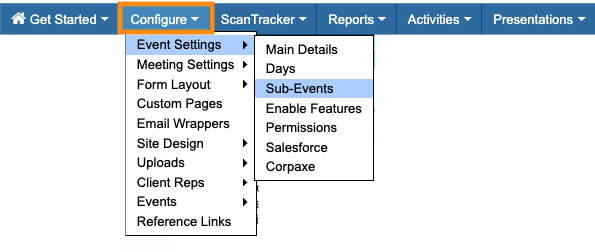
You’ll create Sub-events in the Configure tab:
Why is it useful?
Sub-events are great when your event has distinct segments, and you want to manage people’s access to meetings, presentations, and activities.
Here are some examples:
- A conference has both in-person and virtual tracks.
- An event is hosting different groups of participants on different days - like sales regions, or industries.
When you create a Sub-event, MeetMax establishes a separate meeting program, and separate sign-ups for activities and presentations.
What participants can access
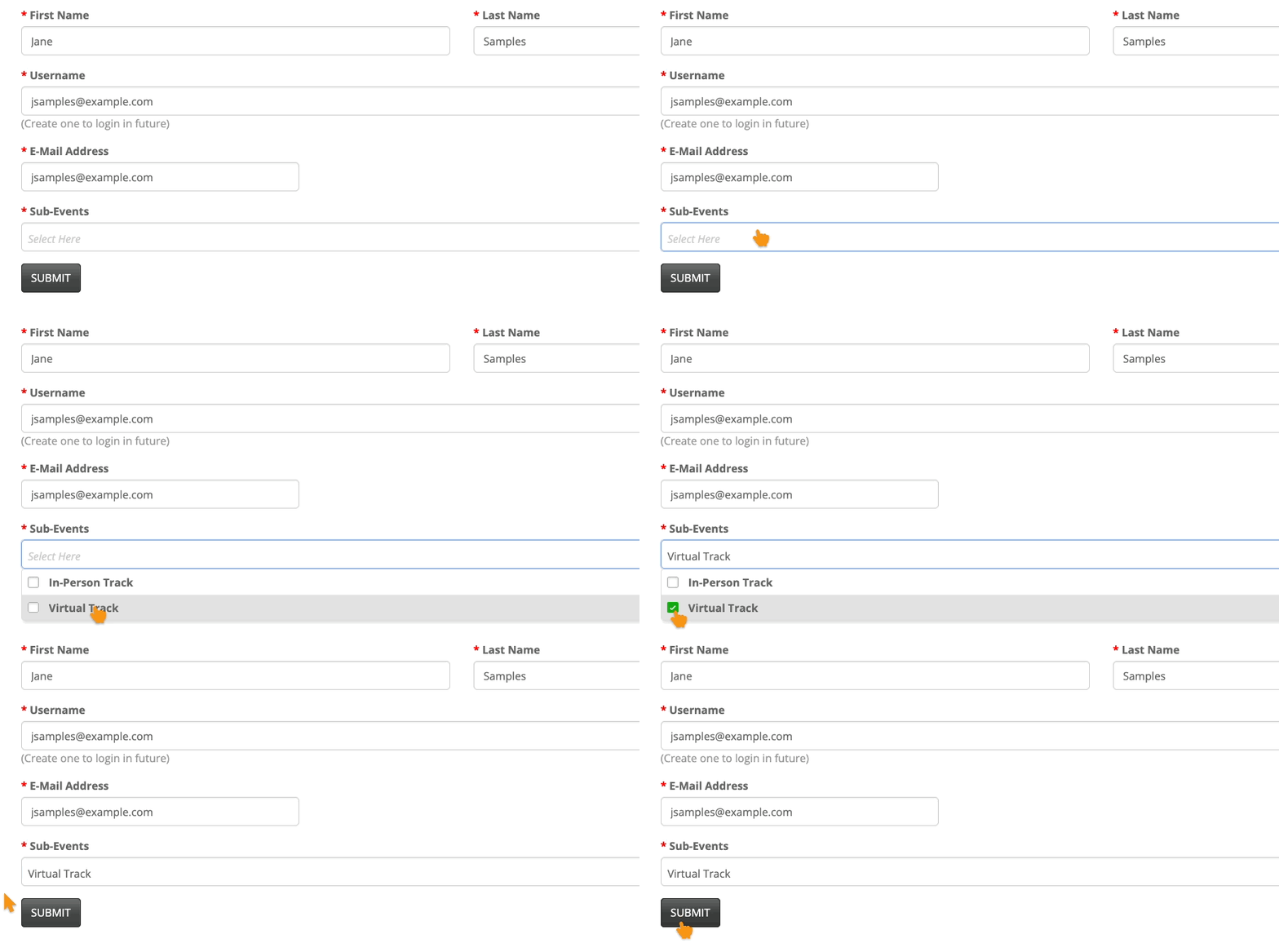
While Attendees and Companies register for your event, they’ll choose a Sub-event. Here’s an example registration form field (we’ll cover this in the sections below):
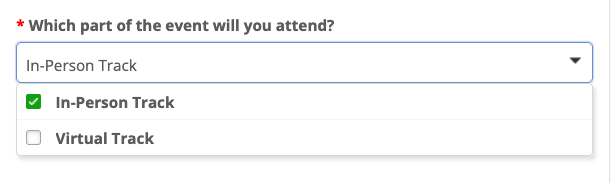
The Attendee’s choice determines what they can access. The dates of your Sub-events also play an important role here:
- Meeting programs are always separate. When a participant chooses a Sub-event, they can only request meetings from other registrants in that Sub-event.
- Presentations and activities can overlap. If your Sub-events have any overlapping days, on those days participants will be able to sign up for presentations and activities from any Sub-event.
For example, let’s say our two Sub-events have one overlapping day, February 3:
| Sub-event | Feb 2 | Feb 3 (overlap) | Feb 4 |
|---|---|---|---|
| In-Person Track: Feb 2 - 3 |
In-person meetings and programming only |
|
|
| Virtual Track: Feb 3 - 4 |
|
Virtual meetings and programming only |
Creating Sub-events
You’ll first create your main event, and then create each Sub-event.
In this example, our event has an in-person track and a virtual track. Each of these will need its own Sub-event.
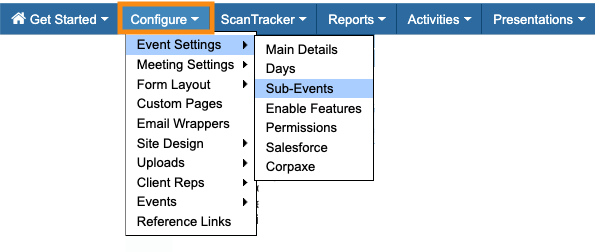
- Step 1. Head to the Configure tab. Choose Event Settings, then Sub-events:
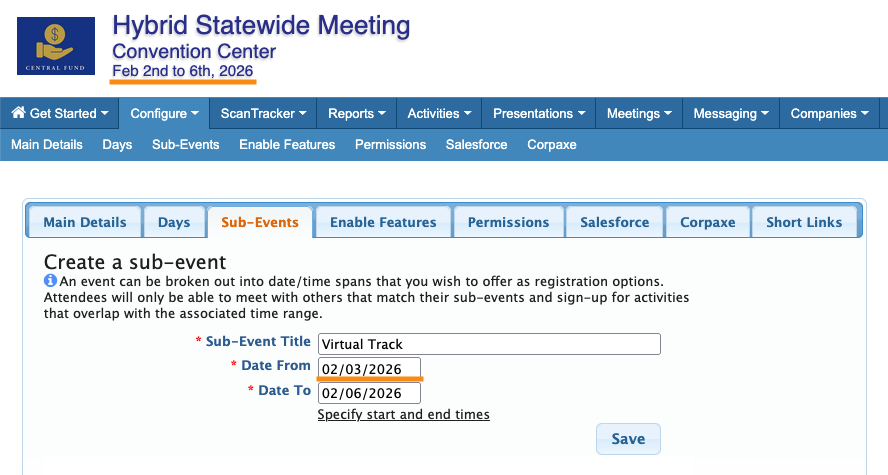
- Step 2. Sub-events can have the same start/end dates, or different ones.
- In this example, our Virtual track will start a day later than the In-person track:
- Step 3. As an option, you can also give your Sub-event start and end times. Click the link to add those, as shown below.
- Be sure to click Save:
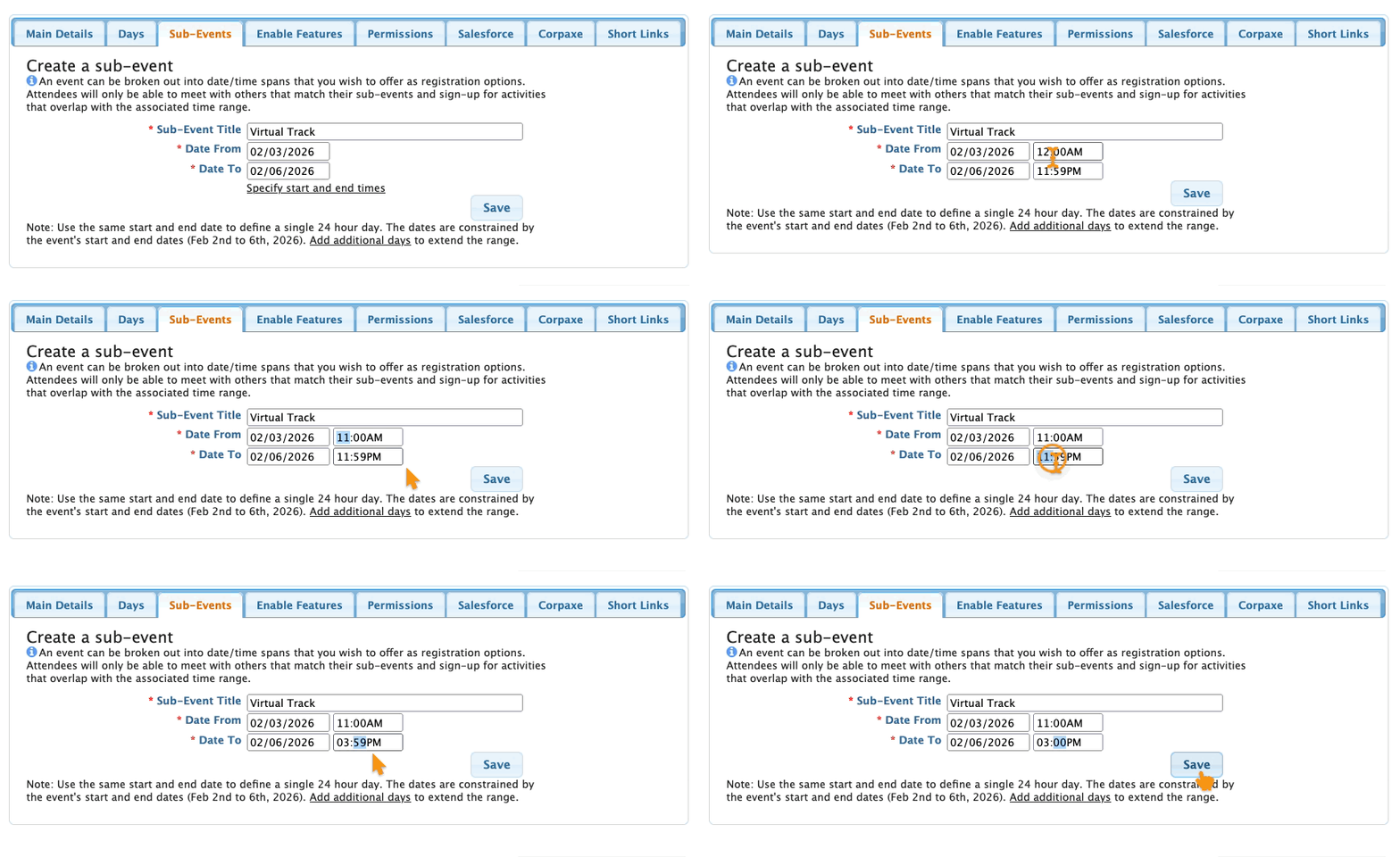
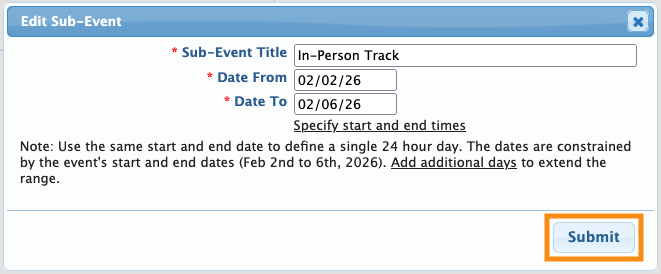
- Step 4. Click Submit to save.
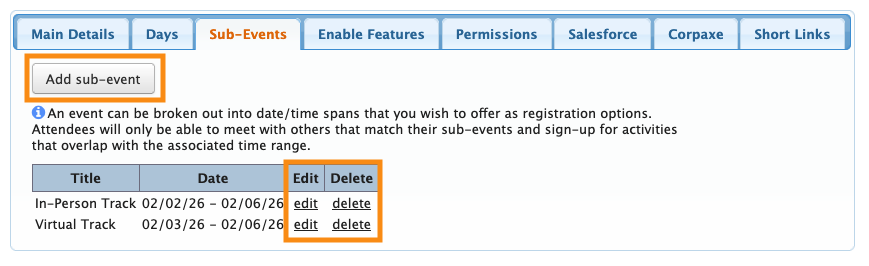
- Repeat these steps to create as many other Sub-events as you need:
- You can return to this page any time to edit or delete your Sub-events, or add new ones:
Adding programming to Sub-events
As we discussed above, Sub-events have separate programming, except on overlapping dates.
For each Sub-event, you’ll need to:
- Customize the registration forms as needed
- Establish meeting time slots
- Add or import meeting locations (or virtual locations)
- Add or import presentations
- Add activities
Registration for Sub-events
When you create Sub-events, MeetMax automatically adds a required field to the Attendee and Company registration forms. (We also add it to the Admin versions.)
The Sub-events field is a drop-down field. MeetMax adds your Sub-event names as choices. You can customize these choices - for example, maybe you want to allow people to register for more than one Sub-event.
When a participant registers for your event, they’ll be required to choose a Sub-event:
| You don’t have to call this field Sub-events. You can update its label in the Form Editor. | |
| If you’d rather assign registrants to Sub-events yourself, you can hide this form field on the public registration forms, and use it in the Admin forms. | |
| Alternatively, you can import participants to Sub-events. |
What Admins see
When you add Sub-events, MeetMax makes them available in the Attendee List and Company List.
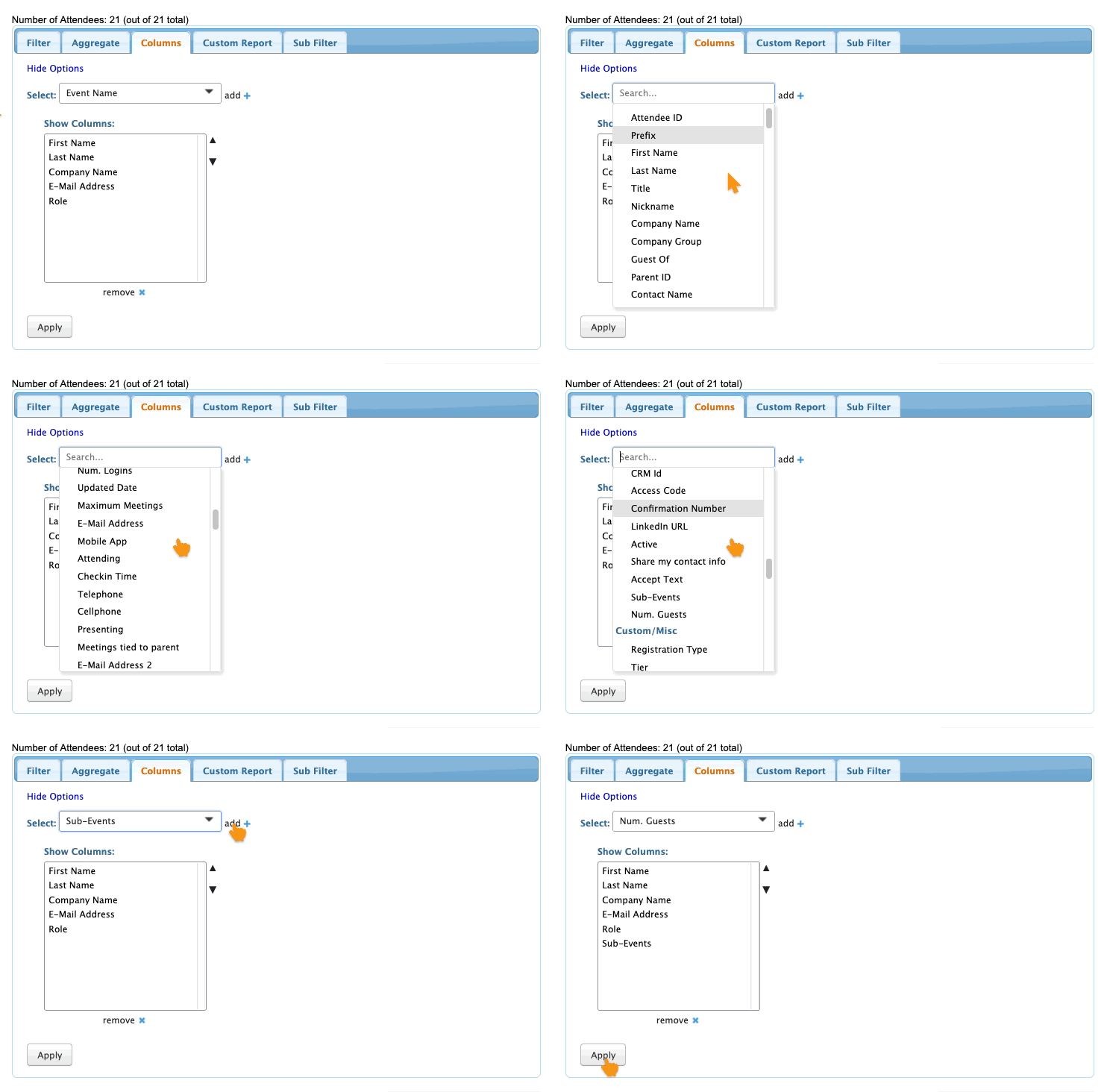
Head to the Columns tab to add the Sub-events column. Be sure to click Apply:
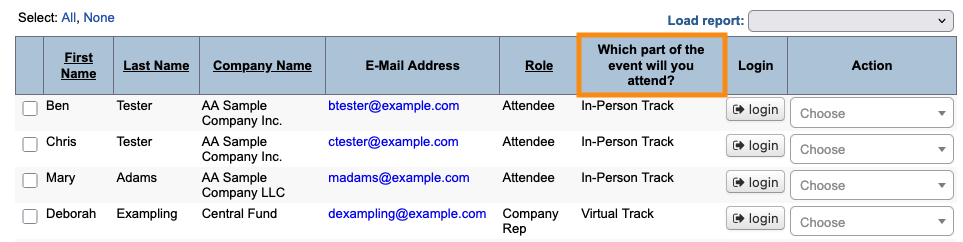
If you’ve changed the label of the Sub-events form field, you’ll see that reflected in the column title:
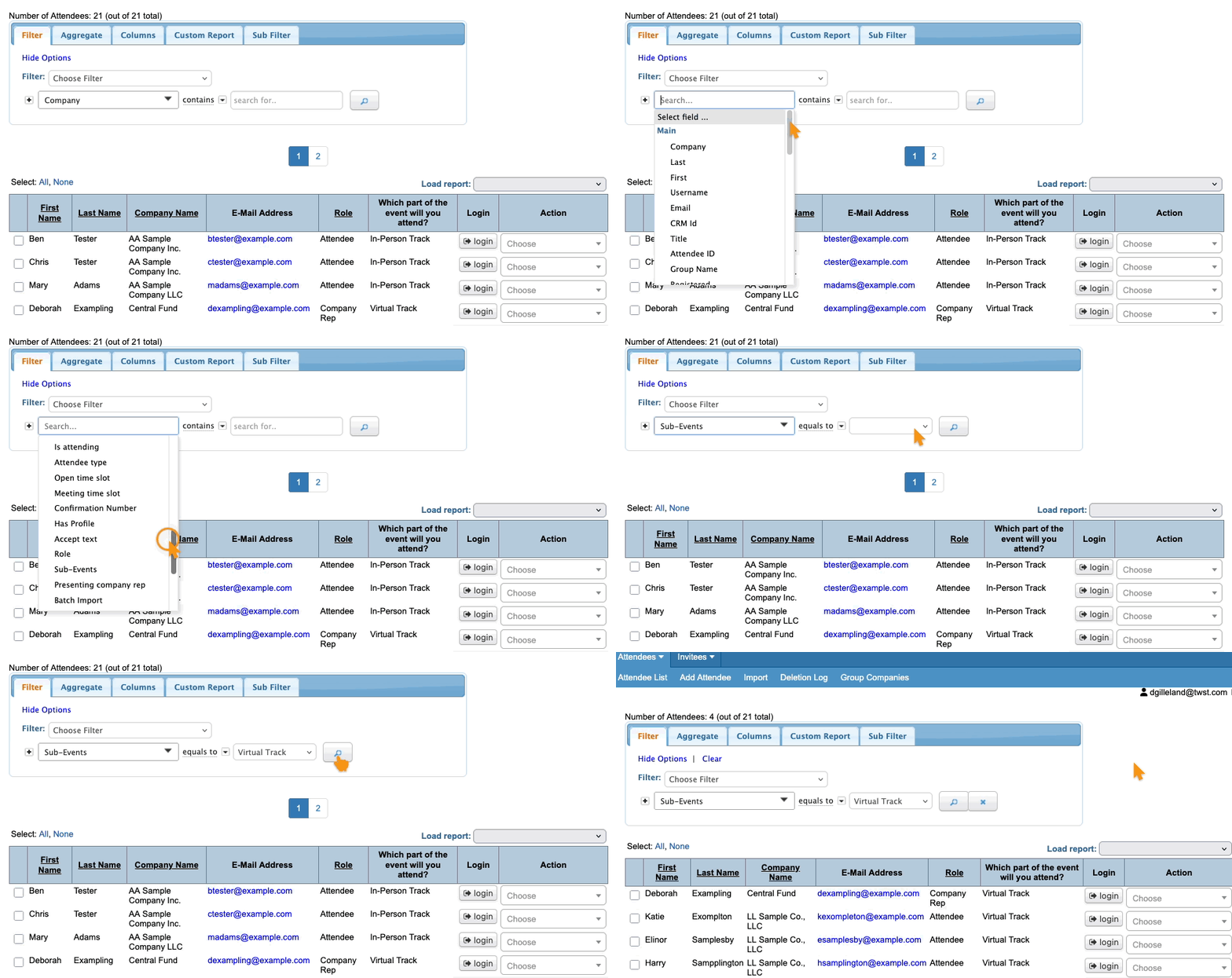
You can also filter either list by any Sub-event, to see all its registered participants:
Sub-events can be part of any custom reports you create from these lists.
The rest of your event management proceeds as usual:
- Companies enter meeting availability; Attendees enter blackout times
- Participants submit meeting requests
- Scheduling meetings from meeting requests
- Collecting presentation sign-ups
- Collecting activity sign-ups
MeetMax ensures each participant has access only to what’s available for their chosen Sub-event.

